Recursive Islands
Simple Explanation
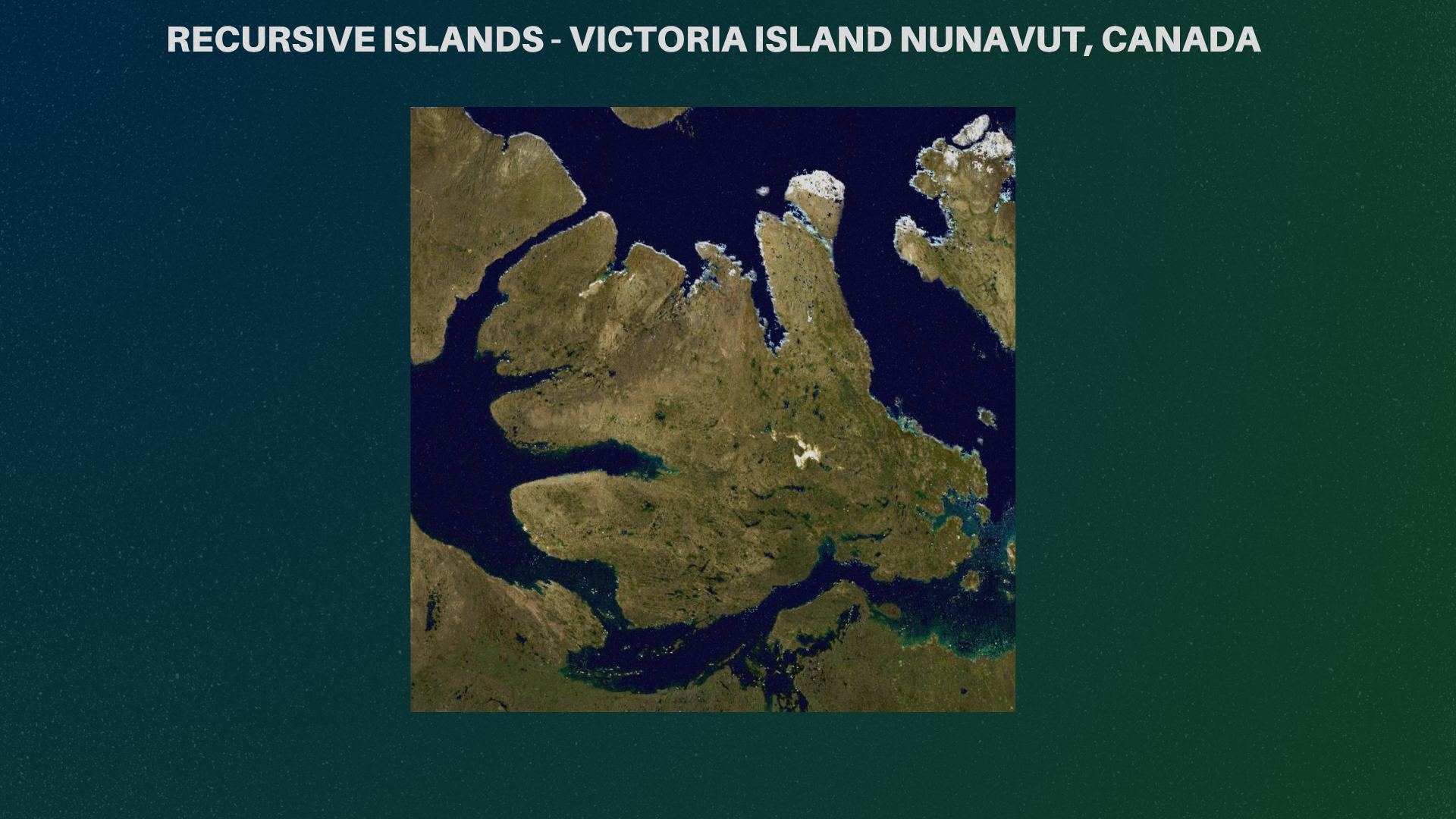
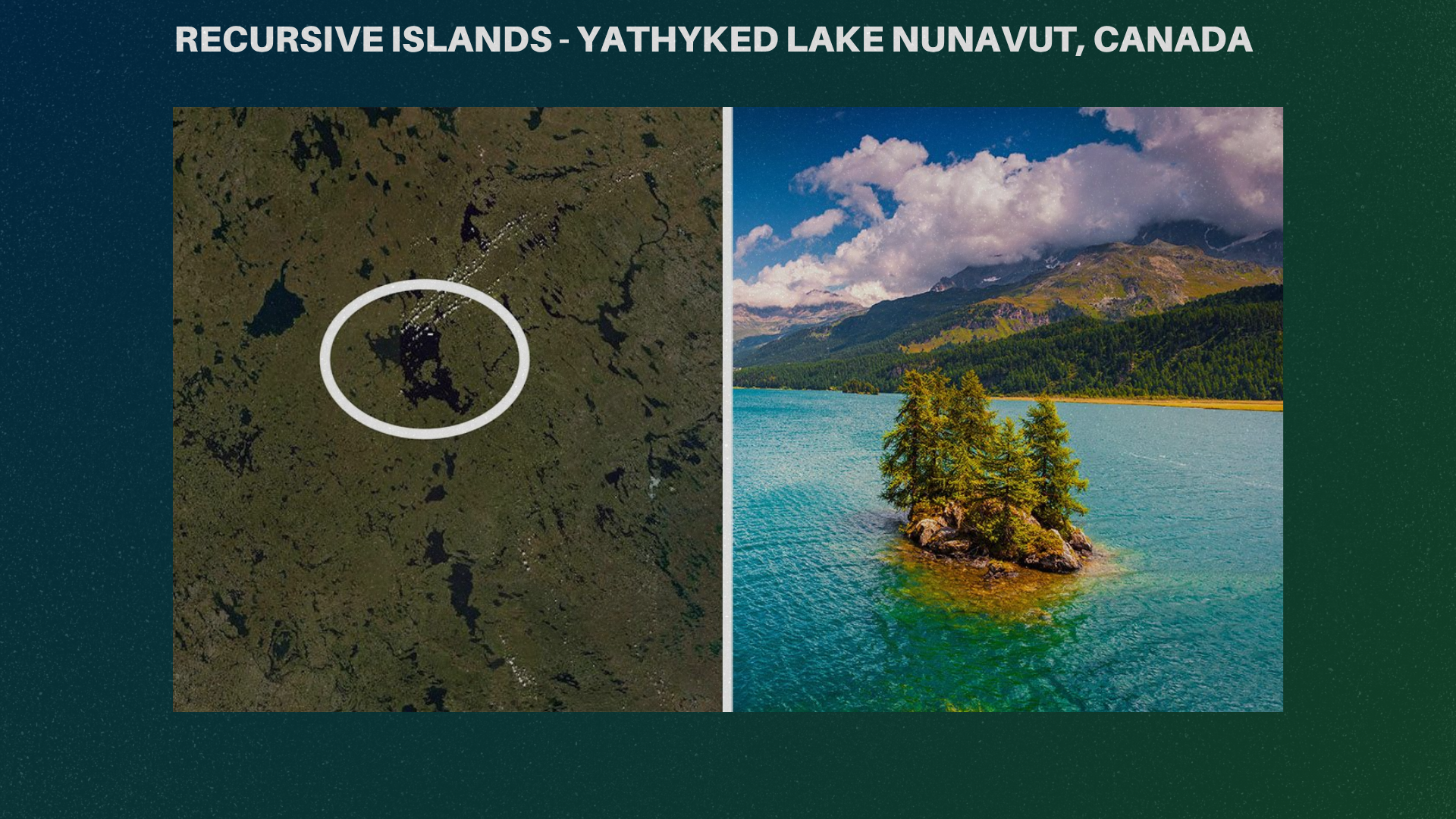
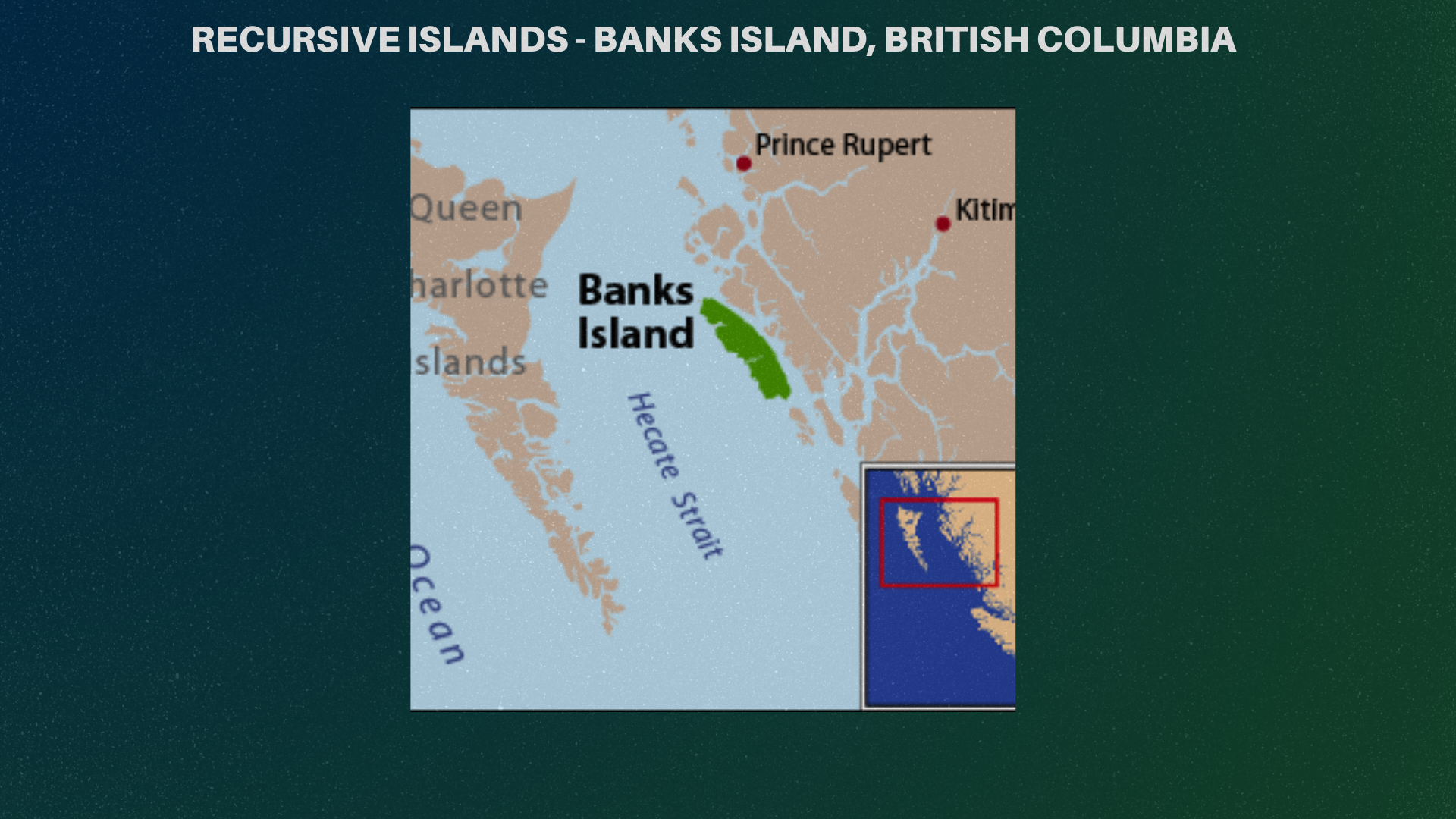
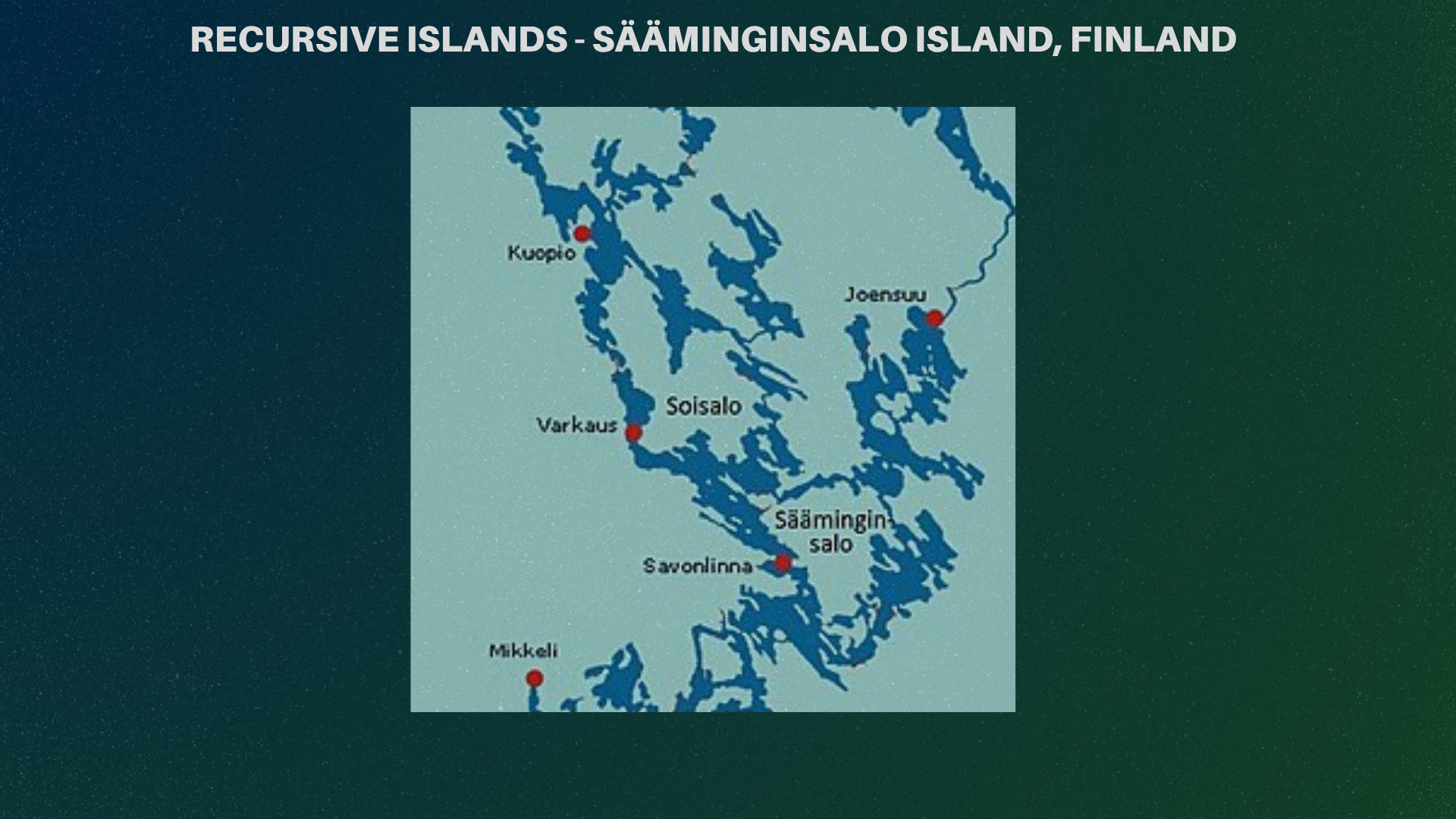
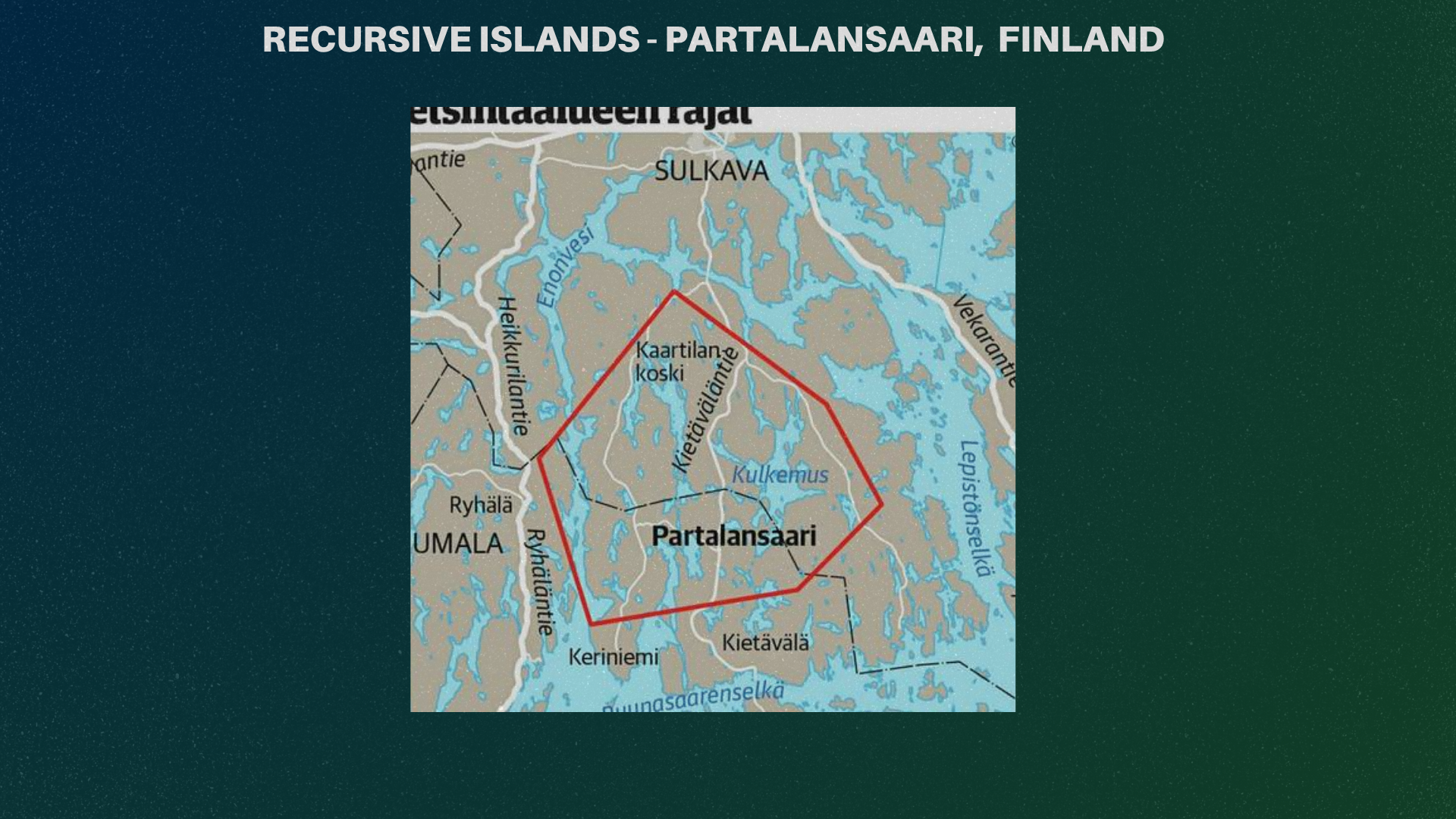
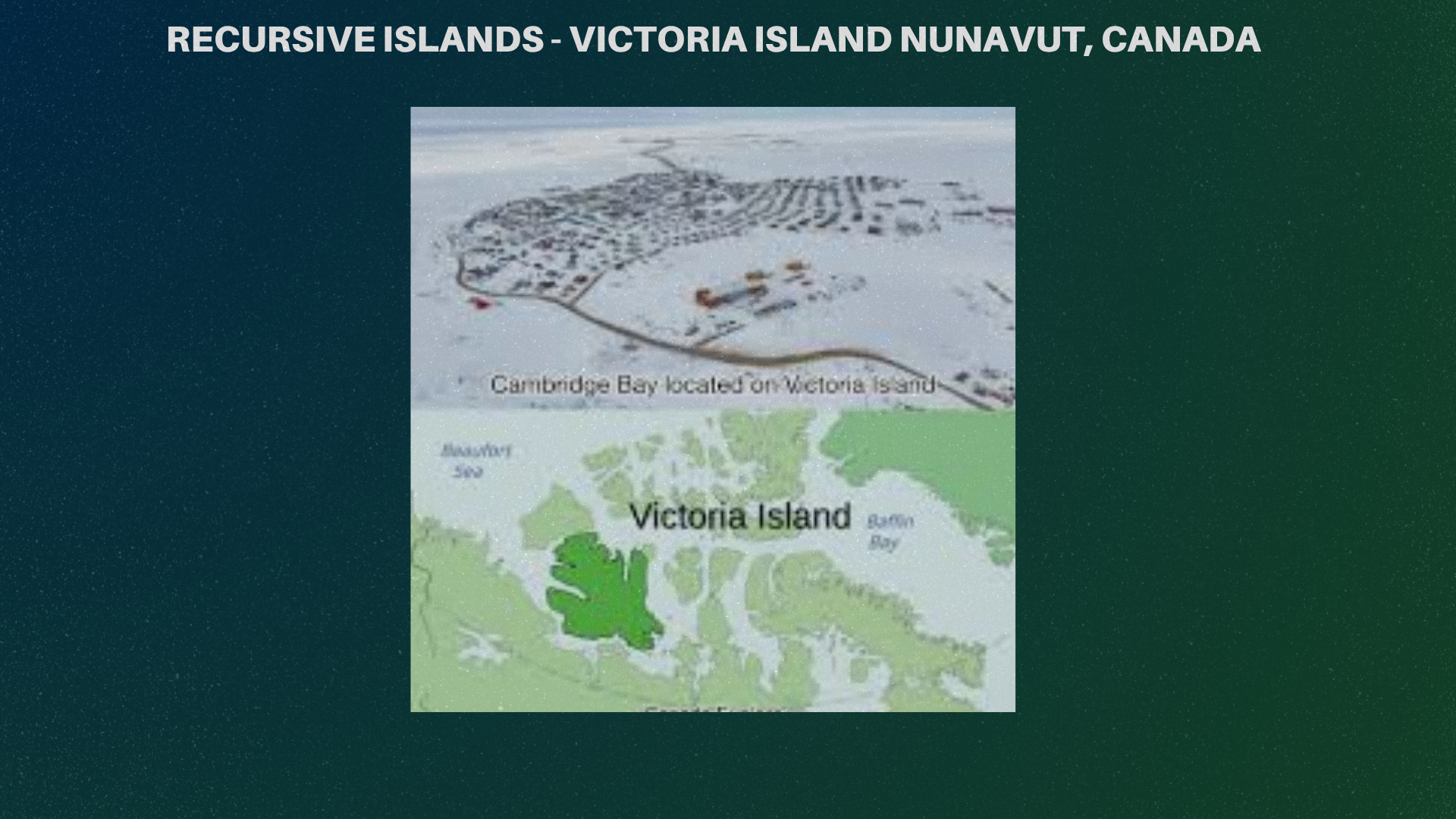
A recursive island is a geographical feature where you have an island containing a lake, and that lake containing another island—and this pattern can repeat. It's literally islands and lakes nested inside each other, like Russian dolls made of land and water.
The Core Idea
An island sits in a lake that sits on an island. The pattern repeats: water surrounds land, which surrounds water again. It's recursion applied to geography.
The Single Thing to Remember
If you see "island in a lake in an island," you're looking at recursion happening in real physical geography—not just a math or programming concept.
Key Concepts
-
Visual recursion — A pattern that contains a smaller version of itself. The whole looks like a tiny piece of the whole.
-
Nesting — Each level sits inside the previous one. Island → Lake → Island → Lake, going inward (or outward, depending how you count).
-
Caldera — An old volcanic crater that fills with water and becomes a lake. This is how many recursive islands actually form geographically.
-
Island definition — For this to work, the water-surrounded land must be large enough to qualify as an "island" not just a rock or small outcrop. Size matters for the pattern to feel real.
-
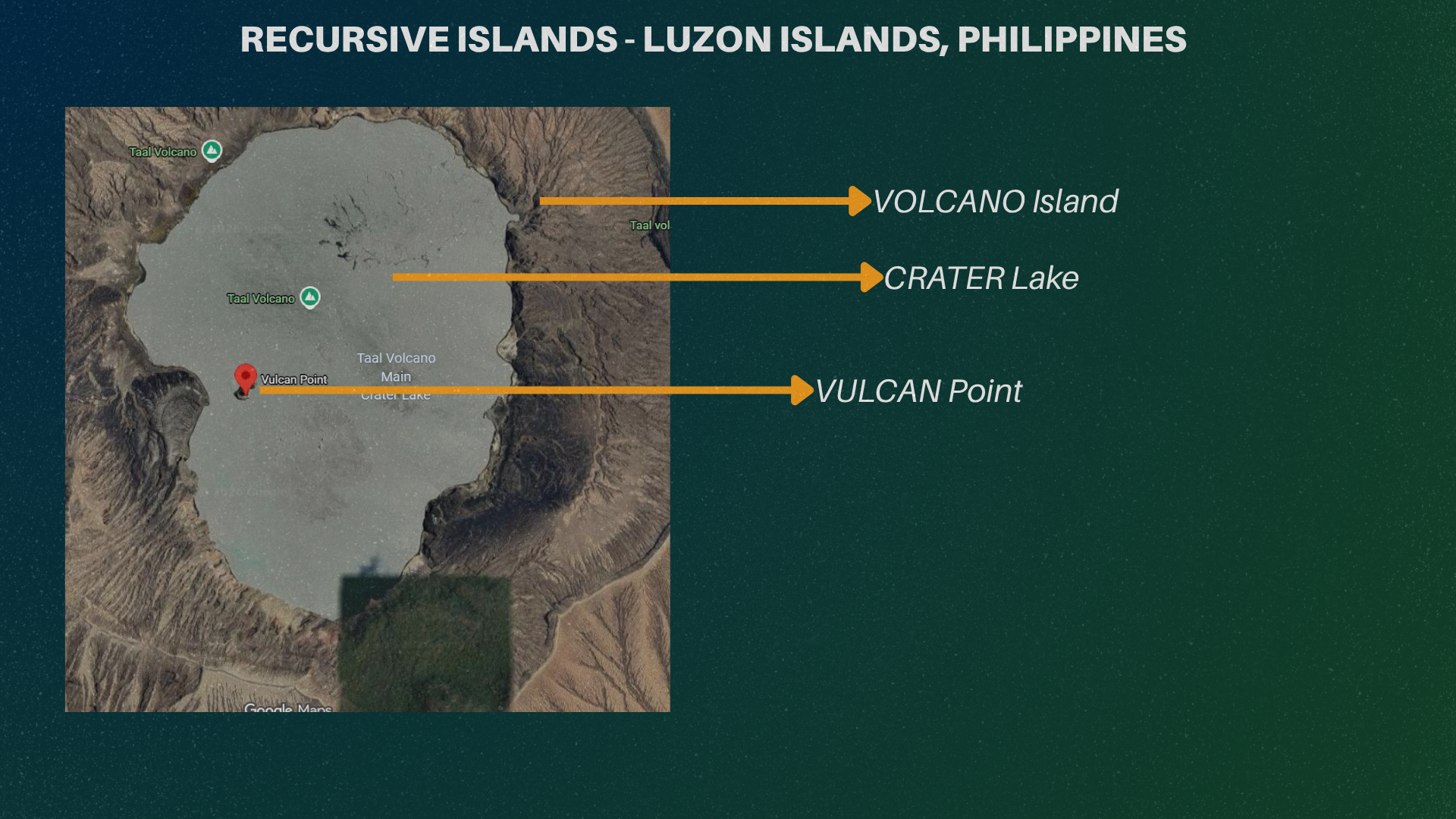
Stops eventually — In practice, recursion stops when islands get too small. Vulcan Point is tiny; there's no island in its crater lake (yet).
-
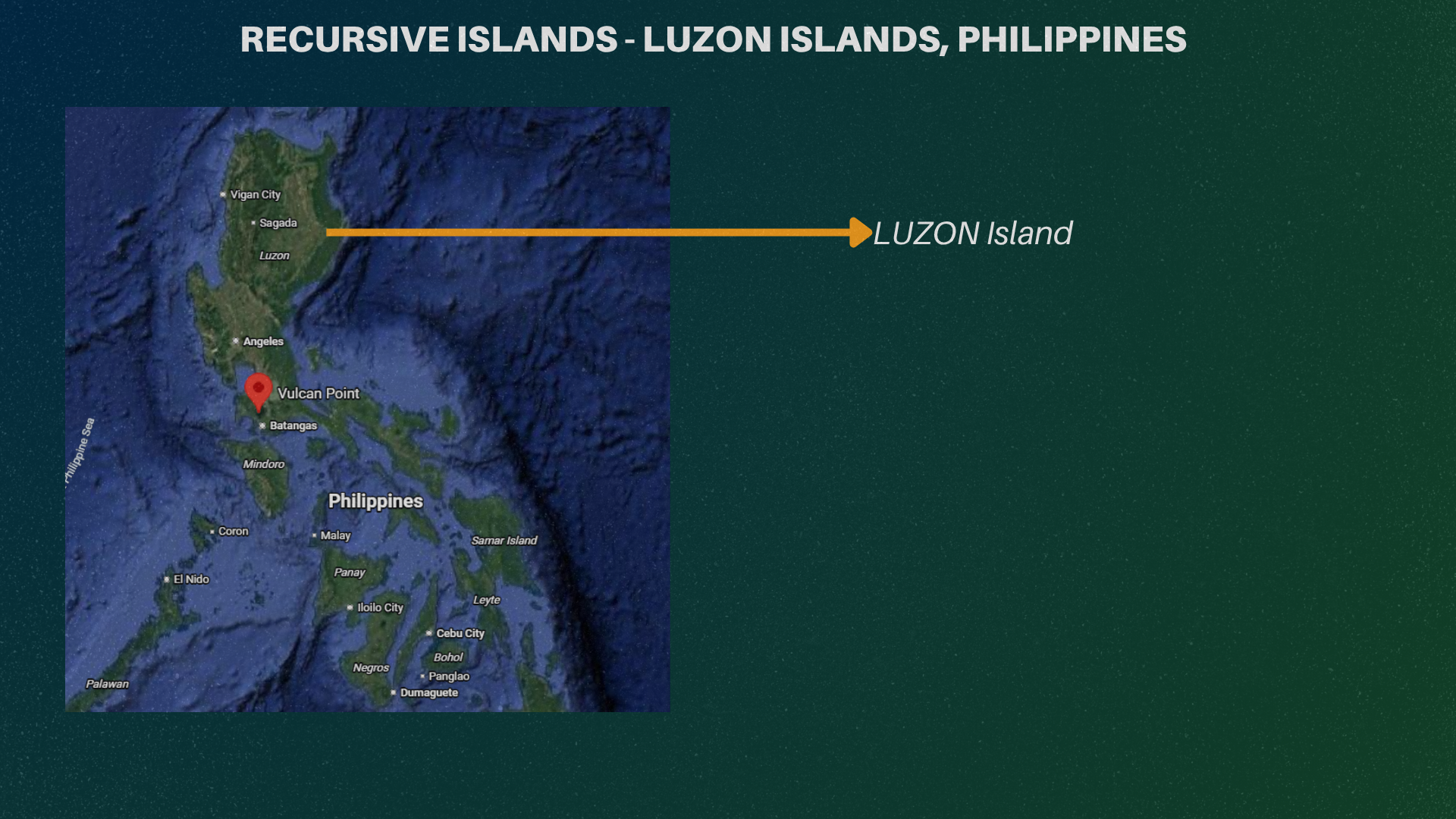
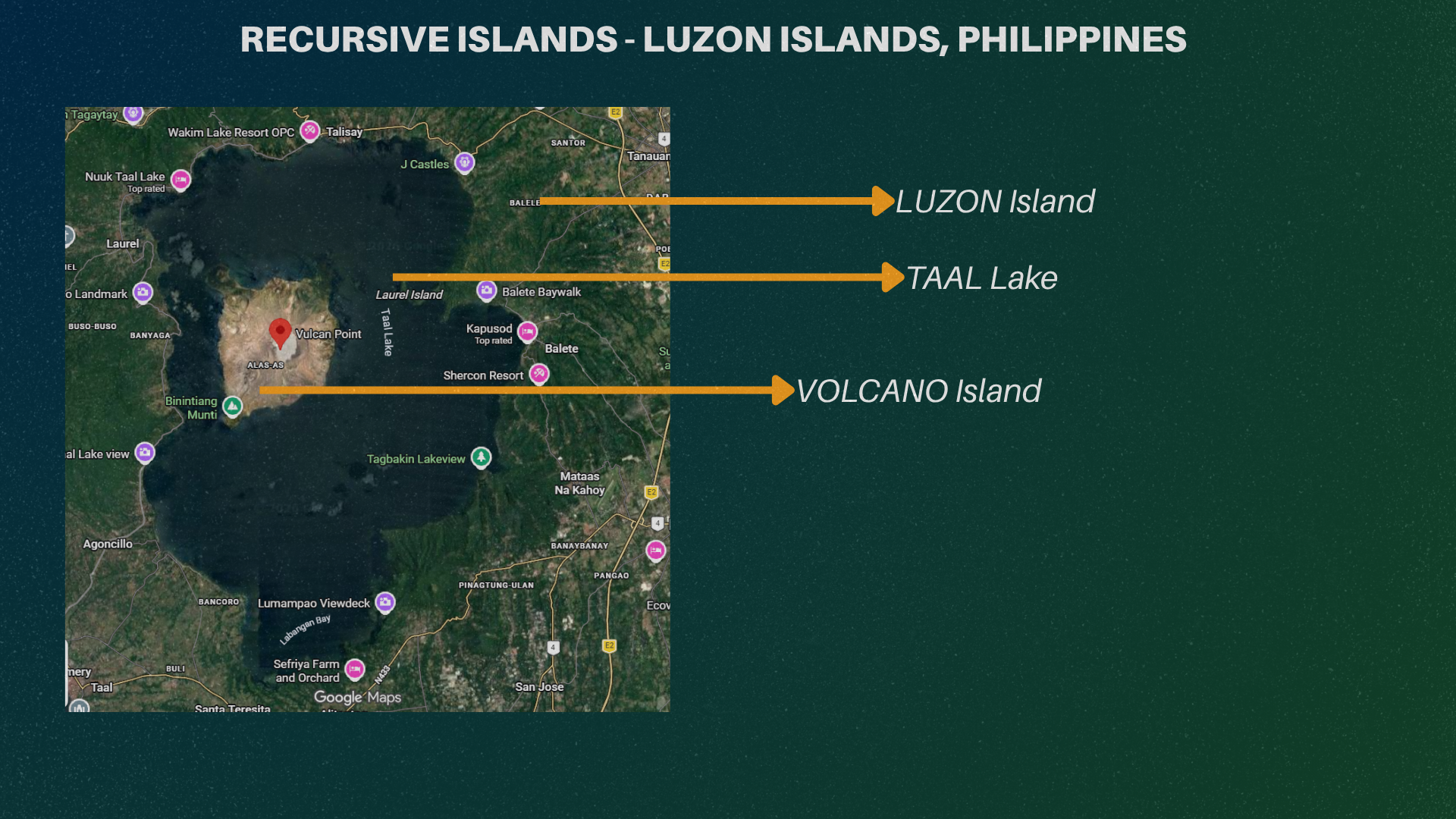
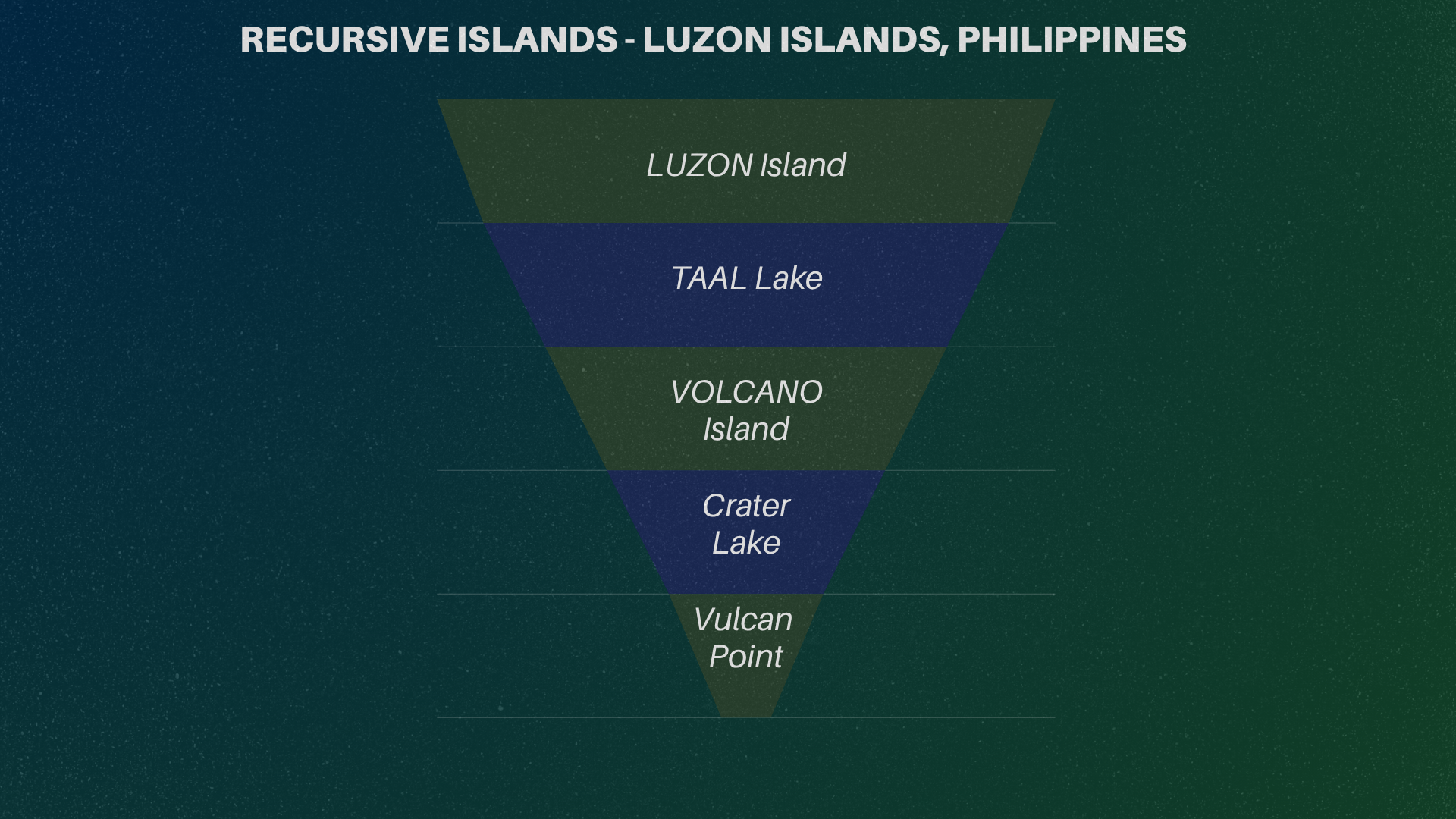
Real, not theoretical — This isn't a math puzzle. Lake Taal → Volcano Island → crater lake → Vulcan Point is an actual place you can find on a map.
-
Rare — Recursive islands are uncommon because you need specific geological conditions: volcanic activity, water collection, and stable land masses all stacking right.
One Analogy
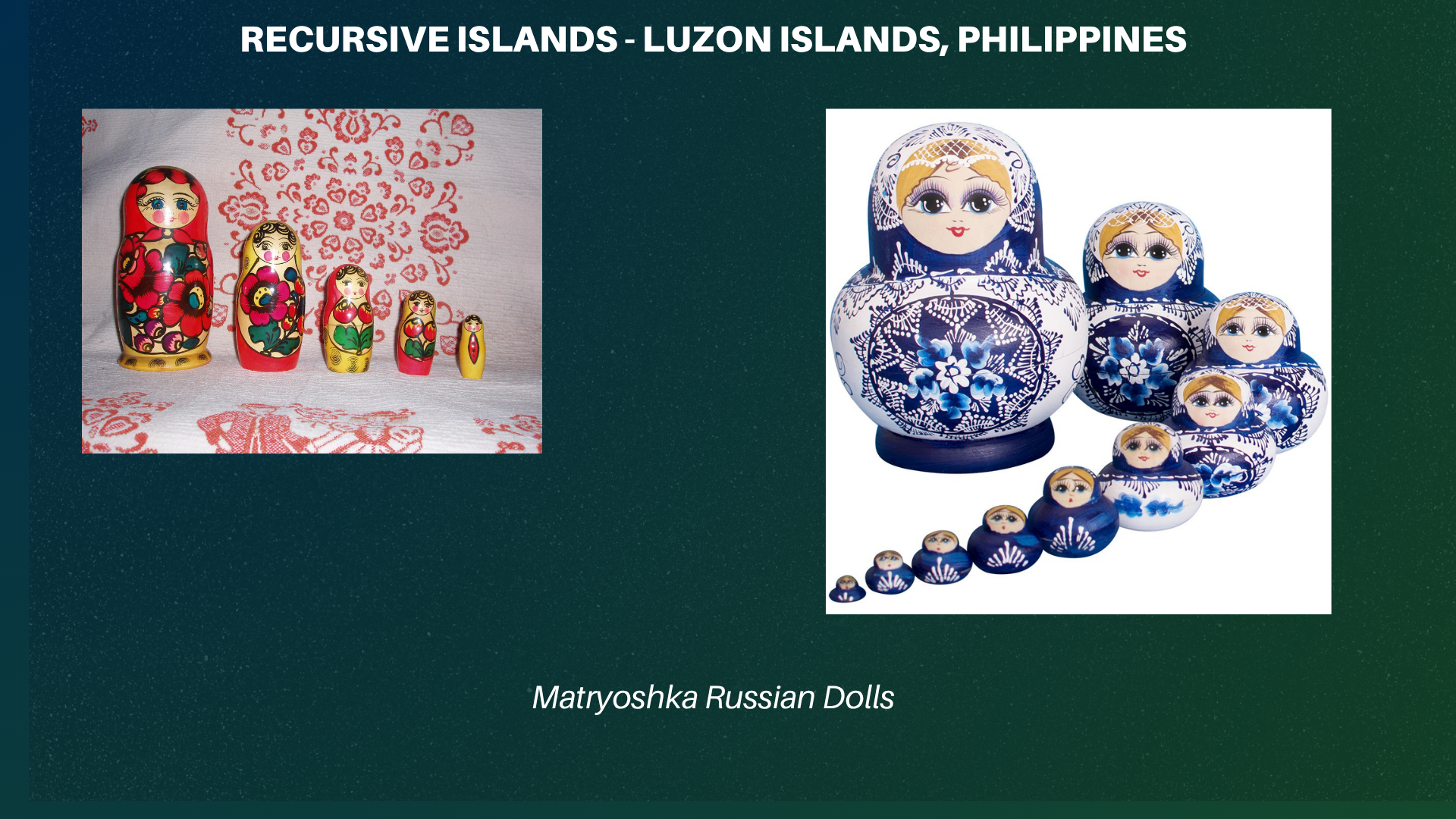
Think of a Matryoshka doll, but instead of painted wood, it's made of solid rock (island) and liquid water (lake). Each time you open one, the next is smaller but follows the same shape.
Where It Actually Matters
-
Navigation and geography facts — If you're mapping the Philippines or teaching world geography, Vulcan Point is genuinely one of the deepest recursions on Earth. It's a real landmark that breaks the usual mental model of "islands are surrounded by water, period."
-
Understanding geological formation — Volcanic calderas and crater lakes follow predictable patterns. Recognizing recursion helps you predict where the next island might form or understand why certain volcanic regions have this nested structure.
-
Ecological isolation — Each nested island creates a separate habitat. Vulcan Point's island supports its own small ecosystem cut off from mainland Luzon. Conservation or species management has to account for these isolated microcosms.
-
Naming and territorial claims — In real administration, recursive geography creates messy jurisdictional questions. Which province owns Vulcan Point? It's on Volcano Island, which is in Lake Taal, which is on Luzon. Recursion forces clearer definitions of what "belongs" where.
Common Confusions
-
"Isn't every island in a lake on land?" — Yes, but not every island contains a lake with another island in it. Recursion requires the pattern to actually repeat, not just exist once. A lake on an island doesn't count unless that lake also has an island.
-
"Doesn't it stop being an island if it's in a lake?" — This confusion comes from thinking "island" means "surrounded by ocean." An island is any land surrounded by water, period. Lakes count. So Volcano Island is genuinely an island, even though it's in a lake, not the sea. The pattern works because the definition is water-agnostic.
Test Your Understanding
-
If a lake on an island has no island inside it, is that a recursive island? (What would need to happen for it to become one?)
-
Could a recursive island be even deeper—island in lake in island in lake in island? (What would prevent this from happening infinitely?)
-
Why does "island" (land surrounded by water) apply equally to ocean islands and lake islands, and why does that matter here? (What breaks if you only count ocean islands?)
Q&A
Can you have three nested levels (island-lake-island-lake-island)? — Theoretically yes, but erosion and geology rarely allow it beyond two or three.
Does Vulcan Point count as a "recursive island" if no island sits in its crater lake? — It's part of the recursion chain, but the pattern technically breaks at the end.
What geological process creates the conditions for recursive islands most often? — Volcanic activity forming calderas that fill with water and trap land.
Could a recursive island exist where the innermost island is larger than the outer one? — No; gravity and water distribution prevent inverted nesting at this scale.
Are recursive islands useful for anything besides geography trivia? — Yes—studying isolated ecosystems, understanding volcanic terrain, and territorial/administrative edge cases.
Accuracy Note
-
Heavily simplified geology — Real volcanic calderas and crater lakes involve complex hydrology, subsidence, and tectonics. This explanation treats them as neat nested containers, which they mostly are at human scales but aren't always perfectly stable or permanent.
-
"Recursive" is loose here — In computer science, recursion means a process that calls itself. Recursive islands are visually recursive but not algorithmically so. The term is borrowed metaphorically.
-
Definition edge cases — Whether something "counts" as an island depends on minimum size, which varies by country. Vulcan Point is tiny (about 130 meters across). There's no universal cutoff, so borderline cases exist.
-
Stopped recursion — We don't know if deeper recursion is physically impossible or just hasn't happened yet due to timing and luck. Geological processes could theoretically allow more nesting.
Recursive Islands Presentation