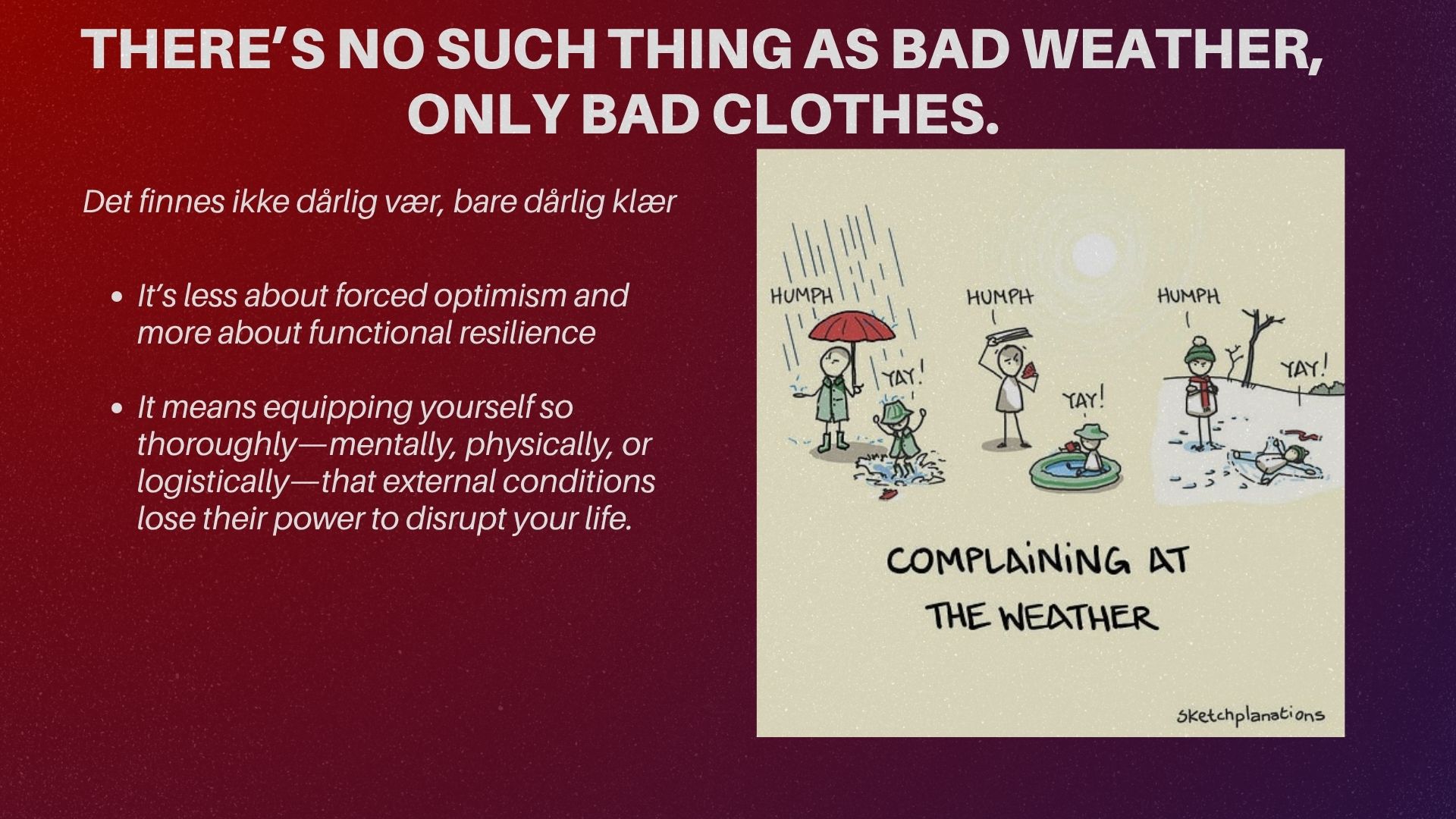
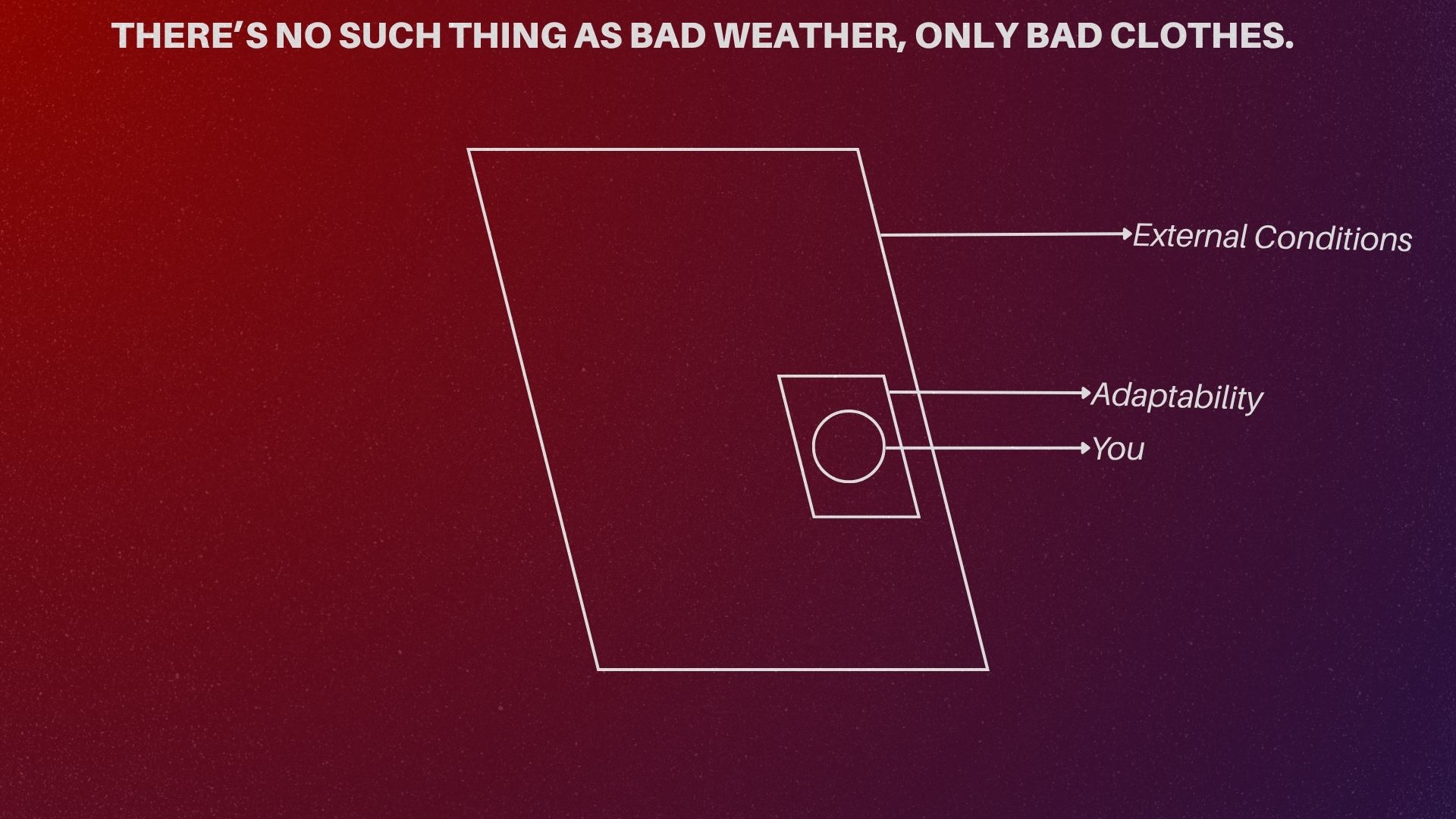
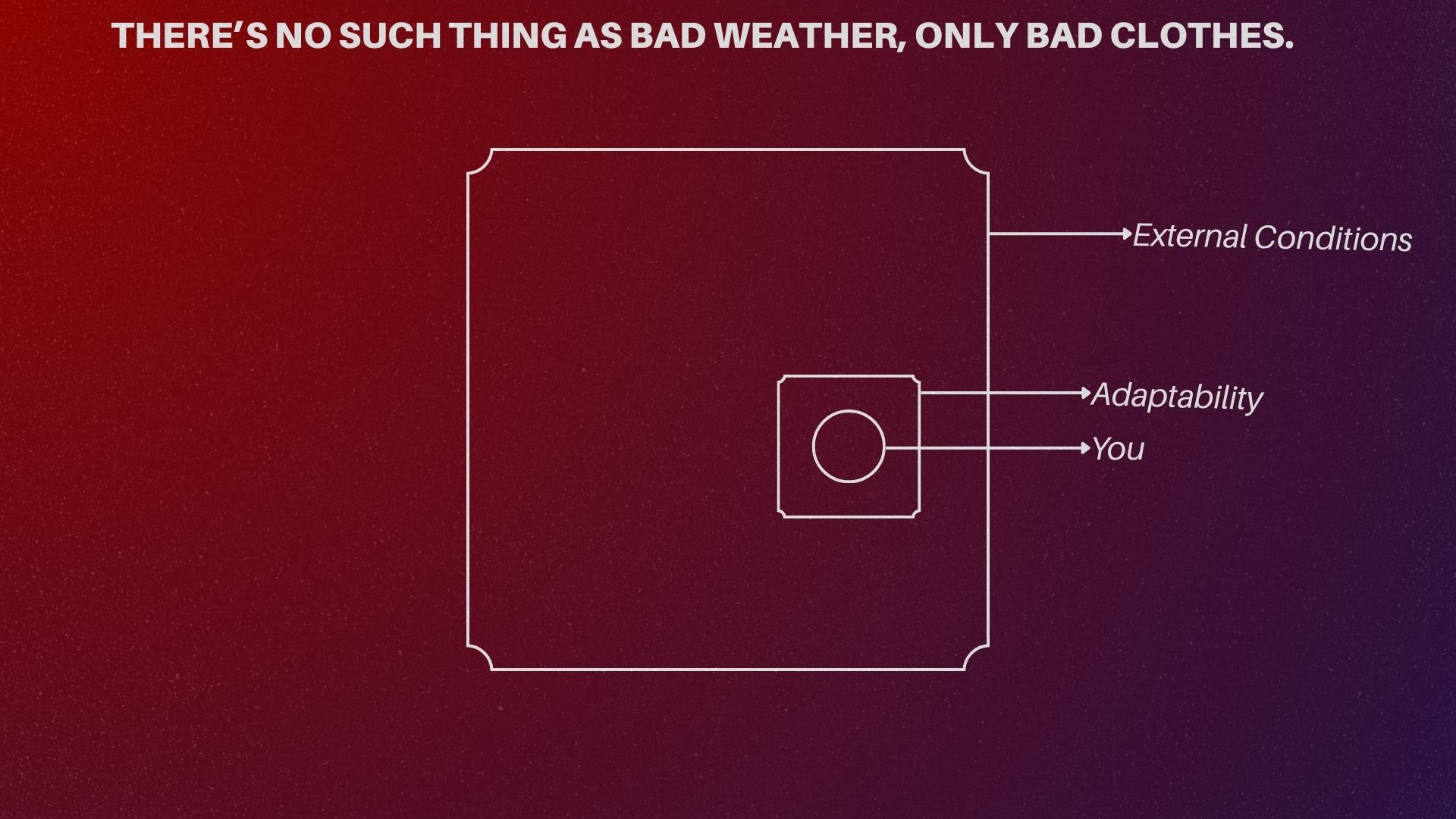
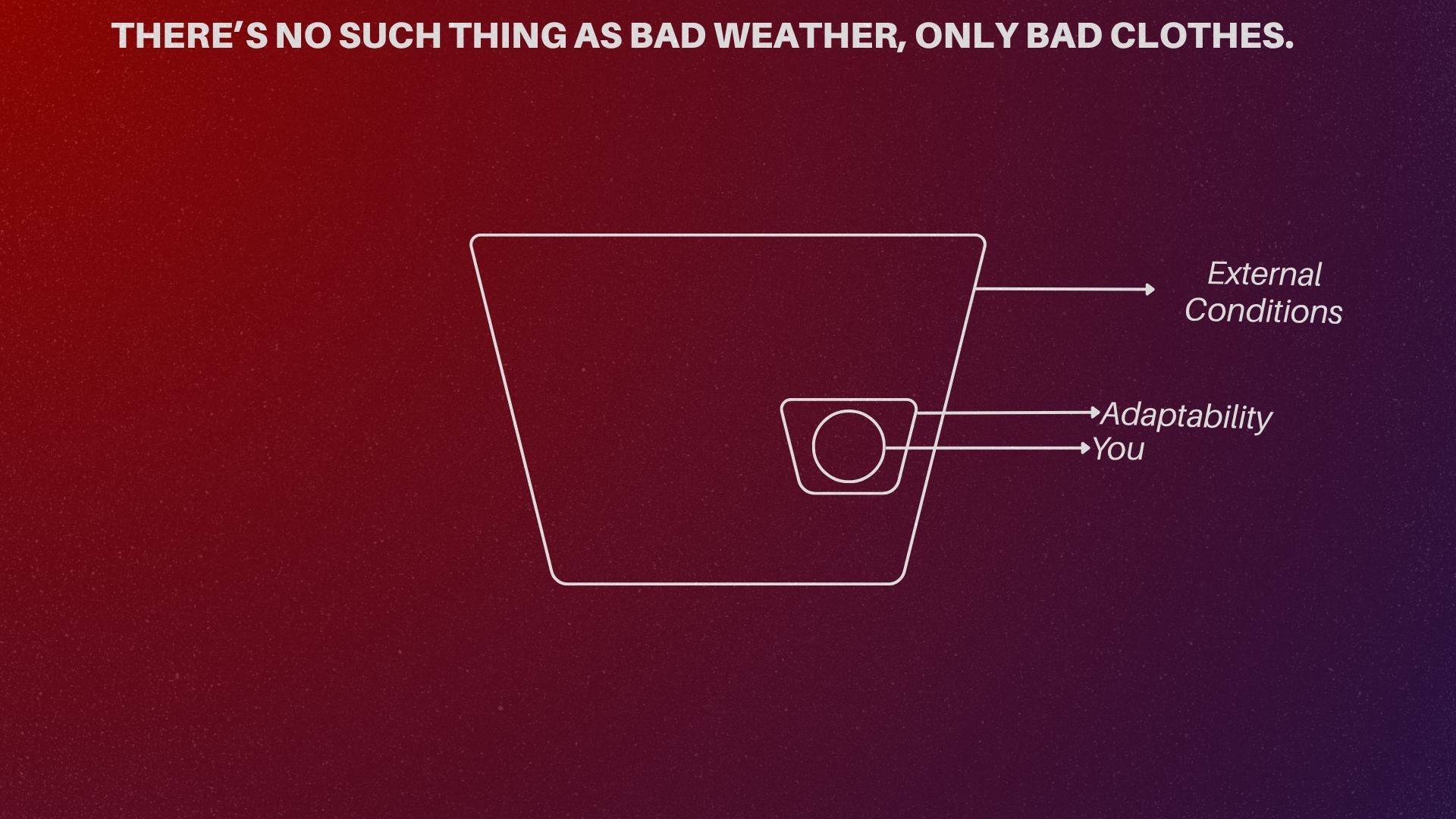
There's no such thing as bad weather, only bad clothing - Norwegian Proverb
Functional resilience is a very practical kind of resilience.
Not just “staying positive.”
Not just “being mentally strong.”
It means:
continuing to function well even when conditions are uncomfortable, uncertain, or imperfect.
A resilient person is not someone who avoids storms.
It’s someone who can still think, adapt, work, decide, and move through the storm without collapsing mentally.
That Norwegian saying —
“There’s no such thing as bad weather, only bad clothing.”
— captures this beautifully.
It does not literally mean:
“Everything can always be solved with preparation.”
Sometimes weather is genuinely dangerous.
Sometimes life hits situations no preparation fully solves.
What the saying points toward is something deeper:
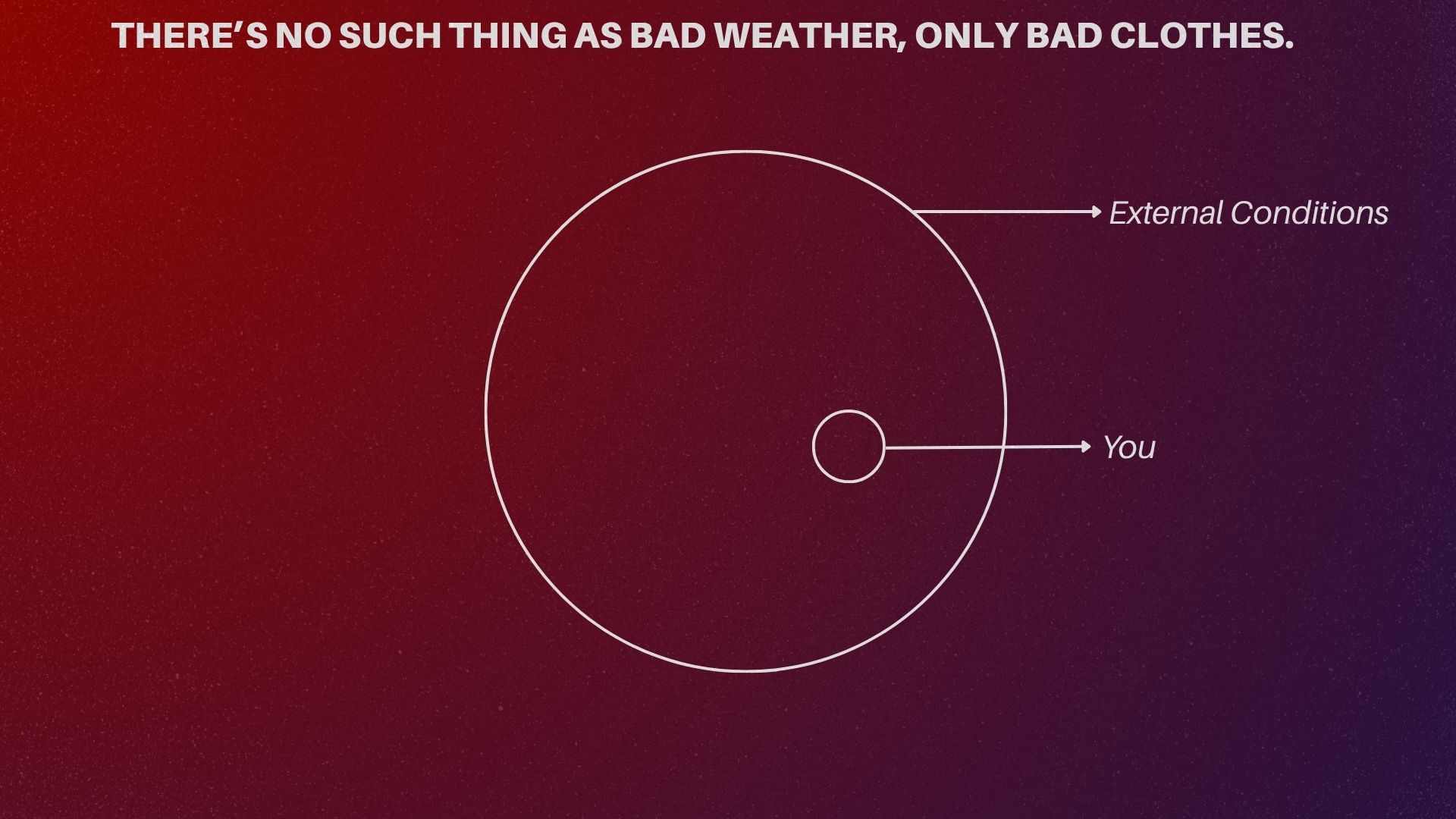
Many forms of suffering come not from reality itself, but from mismatch between reality and our readiness for it.
That is functional resilience.
A few examples:
Winter feels unbearable to someone dressed for summer.
Criticism destroys someone whose identity depends on approval.
Small uncertainty paralyzes someone who never learned ambiguity.
Financial instability crushes someone with zero buffer.
A difficult conversation becomes catastrophic for someone who never practiced emotional regulation.
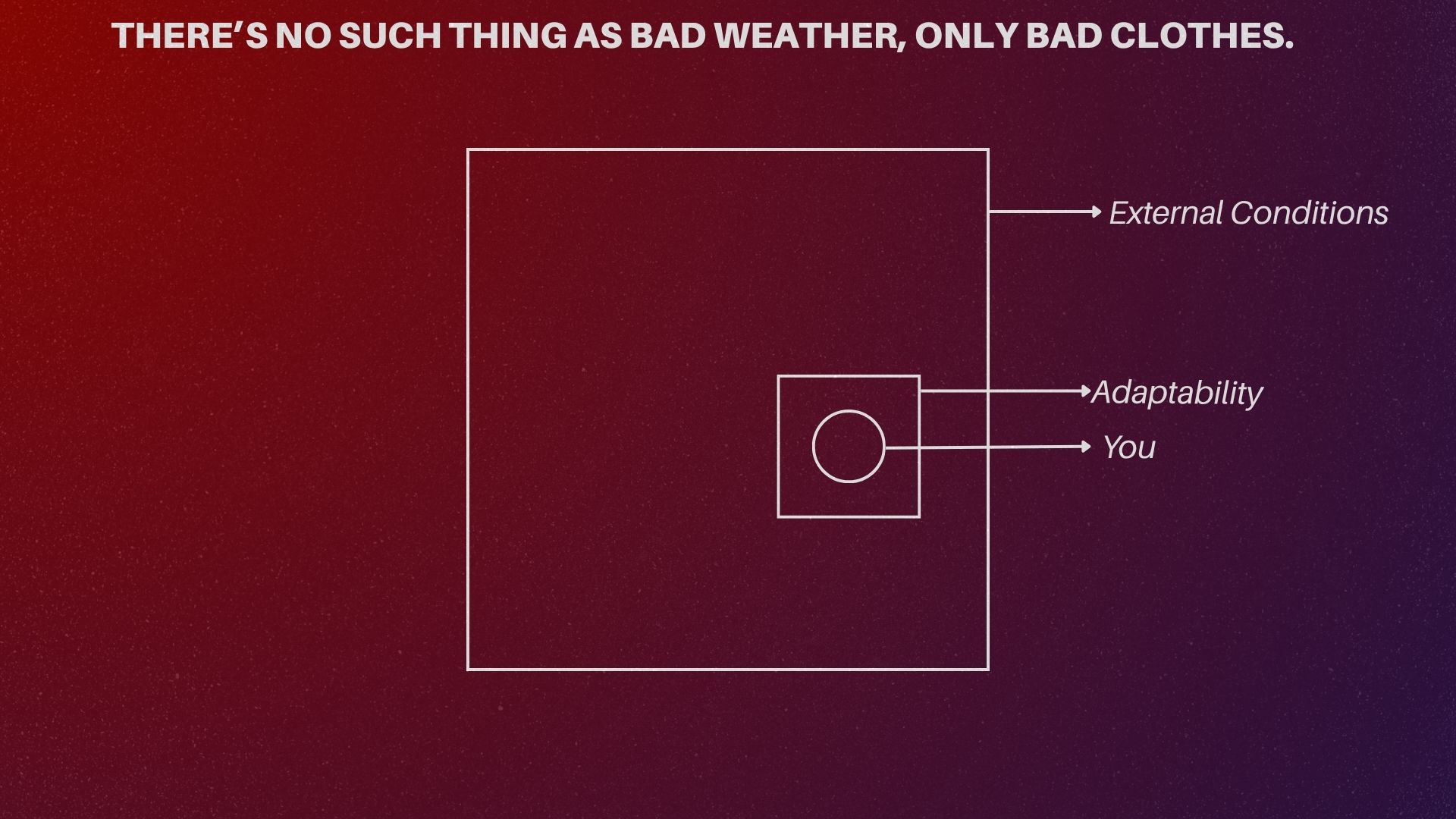
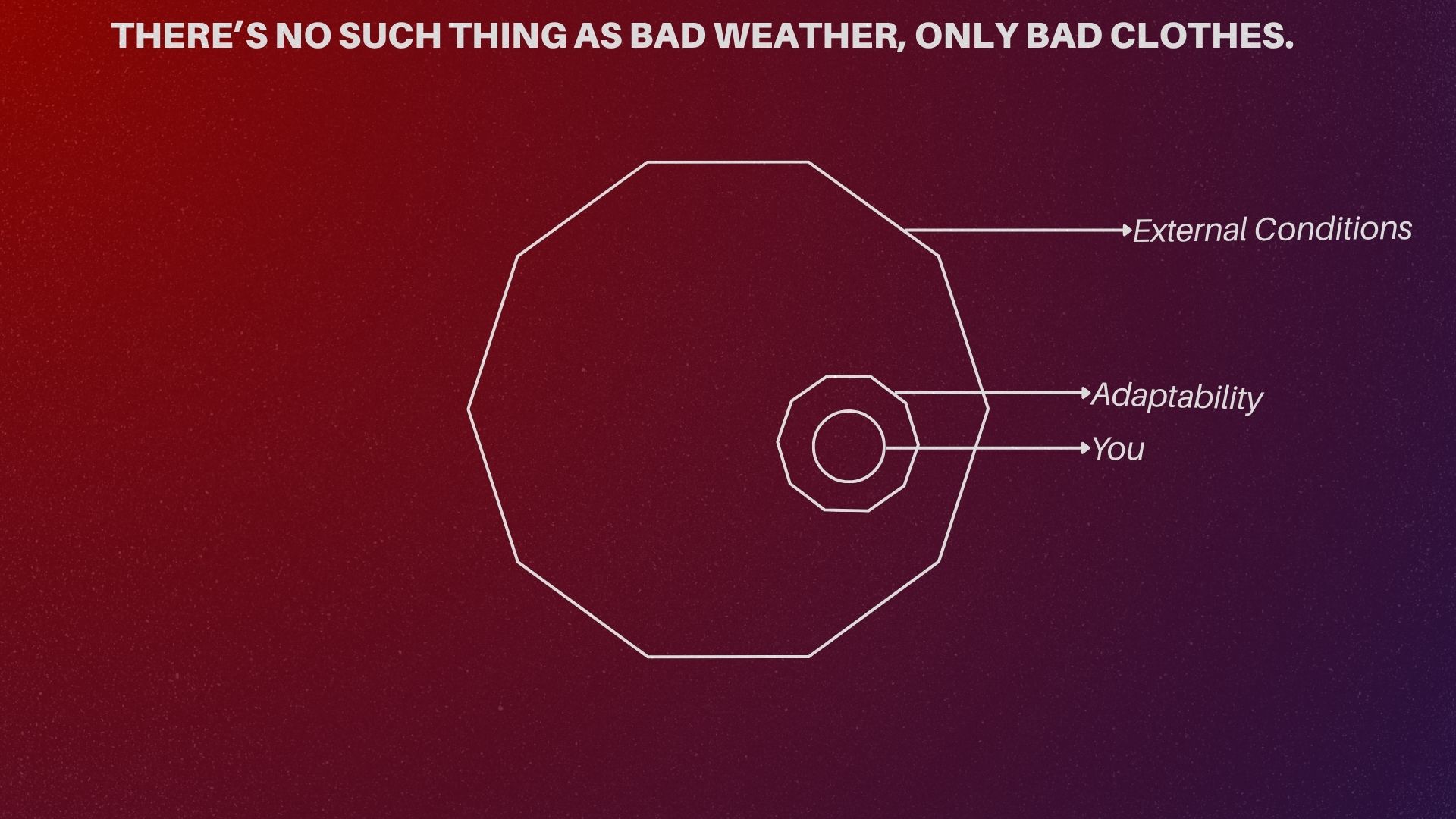
The “clothing” is not just physical preparation.
It can mean:
emotional tools
habits
expectations
systems
skills
mindset
community
routines
boundaries
So the sentence becomes:
“Life is often less about controlling conditions and more about building capacity.”
That’s why Nordic cultures often use weather as a metaphor for life:
you do not wait for perfect conditions to live.
You adapt.
You learn to walk in rain.
You layer up.
You carry equipment.
You normalize discomfort.
You stop treating inconvenience as catastrophe.
In practical life, this idea appears everywhere:
Work
A resilient worker does not need “perfect motivation” every day.
They build systems that allow functioning even during low-energy periods.
Relationships
Emotionally resilient people do not expect zero conflict.
They develop communication skills and recovery skills.
Health
You cannot prevent aging, stress, or sickness entirely.
But sleep, exercise, nutrition, and routines become the “clothing.”
Learning
A resilient student expects confusion.
Instead of interpreting difficulty as failure, they interpret it as part of the process.
Money
Emergency funds are “clothing.”
Insurance is “clothing.”
Multiple skills are “clothing.”
Creativity
Writers who only create when inspired collapse easily.
Professionals learn to work through imperfect conditions.
There’s another subtle layer to the quote:
People often spend enormous energy trying to eliminate discomfort from the world,
instead of increasing their own adaptability.
Functional resilience shifts the focus from:
“How do I make life stop being difficult?”
to:
“How do I become more capable inside difficulty?”
That mindset becomes powerful because reality is unstable by nature.
But there’s also an important balance:
functional resilience should not become emotional suppression or endless self-optimization.
Sometimes:
the weather really is dangerous,
the workplace really is toxic,
the system really is unfair.
Good resilience is not:
“endure everything forever.”
It is:
“adapt wisely, prepare intelligently, and recognize when conditions truly require shelter, change, or retreat.”
So the healthiest interpretation of the quote is probably:
Prepare for reality instead of demanding reality match your comfort.
One visual analogy
Same tree through seasons:
- summer
- autumn
- winter
- storm
- spring
The tree changes form,
but does not stop being alive.
Leaves fall.
Branches bend.
Snow accumulates.
Then renewal happens
Functional resilience is not rigid stability.
It is adaptive continuity.
The tree survives because it bends,
because it sheds,
because it conserves energy seasonally.